Room Decode may earn a commission when you buy through links on this page. Product links are placeholders for now and will be updated with live affiliate links. As an Amazon Associate I earn from qualifying purchases.
Organic modern design is what happens when minimalism gets warmer, softer, and more human. It keeps the clean lines and breathing room, but trades cold white surfaces for linen, oak, stone, clay, wool, and plants.

This style is a good fit if you want your living room to feel calm without feeling empty. The room above works because it does not rely on a lot of color or busy decoration. Instead, it builds interest through shape, texture, scale, and natural materials. The palette is restrained, but the pieces have enough presence that the room still feels designed.

The key is not buying everything in beige. That is where many organic modern rooms go flat. The trick is choosing a few simple forms, then making sure every surface has a tactile quality: nubby upholstery, visible wood grain, matte ceramics, woven baskets, textured plaster, soft rugs, and leafy greenery.

The Room Decode
The sofa is quiet, the coffee table is sculptural, the rug is soft and oversized, and the olive tree gives the room height. Each object is simple on its own, but together they create depth. This is the core of organic modern design: fewer things, better textures, and shapes that feel natural rather than rigid.

Start With A Sofa That Looks Relaxed, Not Precious
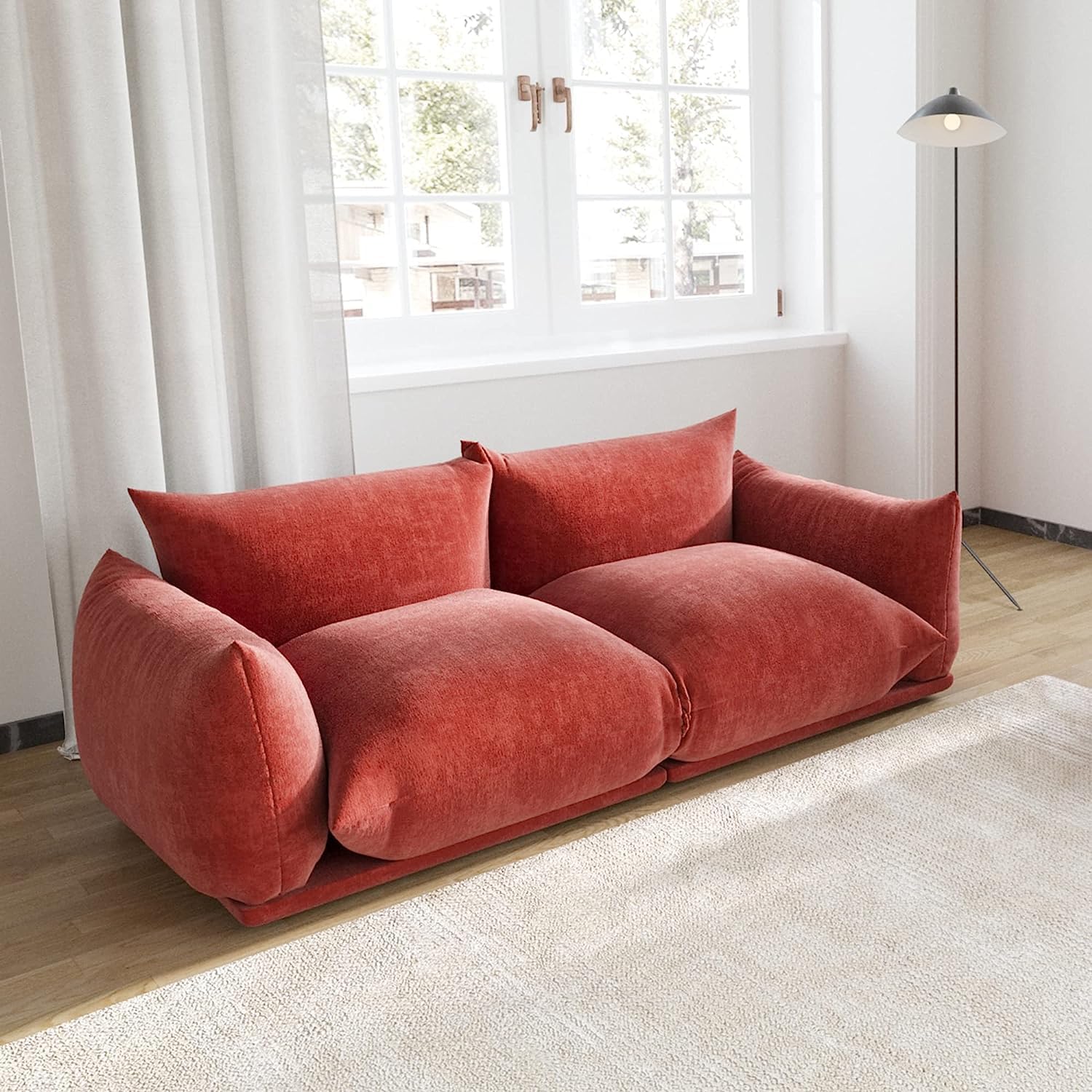
The sofa is the anchor of an organic modern living room, and it should look comfortable before it looks formal. A cream or oatmeal sofa works because it brightens the room while staying softer than bright white. Look for linen, cotton-blend, or performance fabric with a slightly slubby texture. The texture matters because it keeps a pale sofa from looking sterile.

Shape matters too. Organic modern furniture tends to feel low, generous, and grounded. A sofa with wide arms, deep cushions, and simple blocky lines will feel more current than something delicate or overly tailored. You do not need a wildly curved sofa, but the room benefits from furniture that has a little softness in the corners.

If you have pets, kids, or a high-traffic home, this is where performance fabric earns its keep. The look can still be soft and natural, but the fabric should be practical enough that you are not terrified to sit down with coffee.

Use One Sculptural Wood Piece As The Focal Point
The coffee table is doing a lot of work in this room. It brings in warmth, visual weight, and movement. Because the sofa and walls are so quiet, the table can be more expressive. A live-edge table, carved wood table, waterfall shape, or chunky rounded coffee table can make the entire room feel intentional.

This is also a smart place to invest visually. You can keep the side tables simple, choose affordable pillows, and use inexpensive baskets, but a distinctive wood coffee table gives the room its personality. If the budget is tight, look for mango wood, acacia, reclaimed wood, or secondhand pieces with good grain and a solid shape.

What you want to avoid is a room full of thin legs and tiny pieces. Organic modern spaces need some visual gravity. A substantial table makes the seating area feel anchored.

Layer Texture Instead Of Color
In a colorful room, contrast often comes from hue. In an organic modern room, contrast comes from texture. That means the rug, pillows, lamps, baskets, and ceramics need to do more than match. They need to feel different from one another.

Try pairing a boucle or linen pillow with a smoother cotton pillow, a ribbed ceramic lamp with a woven basket, a wool rug with a stone side table, and a matte vase with glossy leaves. The palette can stay within ivory, oatmeal, taupe, olive, and warm wood, but the surfaces should not all behave the same way.

A good rule: if the room looks boring in a photo, add texture before you add color. A thicker rug, a more sculptural lamp, or a larger plant will usually solve the problem better than another beige pillow.

Bring In Greenery With Height
A tall tree or branch arrangement changes the whole room. It breaks up the horizontal line of the sofa, softens the wall, and gives the eye somewhere to travel. Olive trees, ficus, rubber trees, and large branches all work well with this style because they feel sculptural rather than fussy.

The planter is just as important as the plant. Choose something with texture: aged terracotta, concrete, stoneware, woven seagrass, or a simple ceramic pot with a handmade feel. A plastic nursery pot sitting in the corner will undercut the room quickly.

If you do not have enough light for a real tree, a high-quality faux olive tree or preserved branch arrangement can still create the effect. Just make sure the scale is generous. Tiny plants scattered around the room do not have the same architectural impact.

Choose Lighting That Feels Handmade
Lighting is where organic modern rooms become warm instead of flat. Look for ceramic table lamps, plaster sconces, linen shades, travertine bases, paper lanterns, or wood accents. The light should feel diffused, not harsh.

One overhead light is not enough. Aim for at least three light sources in a living room: a table lamp, a floor lamp or sconce, and a soft ambient source. Warm bulbs are essential. Cool white bulbs can make even the best organic modern room feel clinical.

Common Mistakes To Avoid
The biggest mistake is making every piece the same color. A room can be neutral and still have contrast. You need light and dark, smooth and rough, matte and glossy, soft and structured. If everything is ivory, the room becomes a showroom blur.

The second mistake is using pieces that are too small. Organic modern design needs scale. A small rug, tiny coffee table, and little plant will make the room feel unfinished. Go larger with fewer items.

The third mistake is forgetting black or dark accents. You do not need much, but a black candleholder, dark wood frame, bronze lamp detail, or charcoal bowl can sharpen the room and keep it from looking washed out.