Room Decode may earn a commission when you buy through links on this page. Product links are placeholders for now and will be updated with live affiliate links. As an Amazon Associate I earn from qualifying purchases.
A biophilic home office should make work feel calmer, not messier. Plants are part of it, but the real design comes from natural light, wood, texture, storage, and a layout that supports focus.
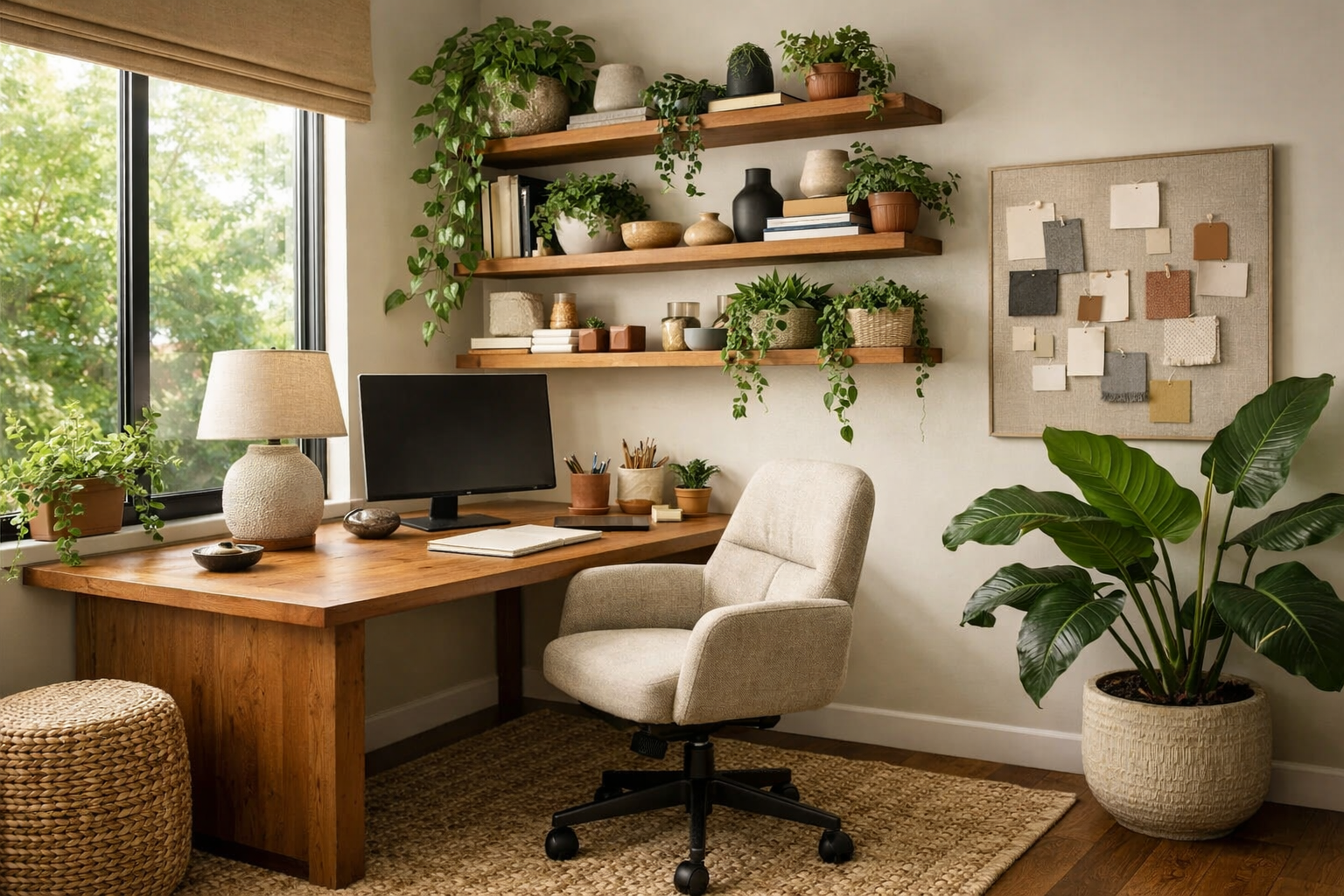
The room above gets the balance right. It has plenty of greenery, but it still looks organized. The desk is generous, the shelves are styled without being overstuffed, the chair looks comfortable enough for real work, and the palette stays warm: wood, cream, sage, clay, black, and leafy green.
This is important because many plant-filled offices become visually chaotic. A productive room needs some open space. Biophilic design is not about turning the office into a greenhouse. It is about using natural elements to make the room feel healthier, softer, and more grounded.
The Room Decode
The desk sits near natural light, the wood tones warm up the room, and the plants are grouped by height. The shelves combine storage and styling, while the pinboard adds function without clutter. The result feels productive, calm, and alive.
Put The Desk Near Natural Light
Natural light is the foundation of a good home office. If possible, place the desk near a window, but not in a position where glare hits your screen all day. A side angle often works best. You get daylight and a view without fighting reflections.
The room above uses the window as part of the design. The desk feels connected to the outdoors, and the plants benefit from the light. Even if your view is not perfect, daylight makes a workspace feel less boxed in.
If you work at night, layer in warm task lighting. A ceramic desk lamp or adjustable wall light can keep the room comfortable after sunset. Avoid cold office bulbs unless you want the space to feel like a cubicle.
Choose A Desk That Feels Like Furniture
A home office is still part of your home. A warm wood desk looks more intentional than a purely utilitarian work table. It also pairs beautifully with plants, woven textures, ceramics, and neutral upholstery.
Size matters. If you work from home often, do not choose a desk that is too small just because it looks cute. You need room for a monitor or laptop, notebook, lamp, water glass, and a little breathing space. A cluttered desk creates visual stress.
If you have a tiny office corner, consider a wall-mounted desk, floating desk, or narrow writing desk with drawers. The goal is a surface that supports work without swallowing the room.
Pick An Office Chair You Can Actually Sit In
Design people love a beautiful chair, but an office chair has to work. The best choice is something ergonomic enough for your body and attractive enough for the room. Look for neutral upholstery, a warm leather tone, or a simple silhouette that does not scream corporate office.
If you need a more technical ergonomic chair, soften it with the rest of the room: a wood desk, woven rug, plants, and warm lighting. Comfort wins. A pretty chair that hurts your back is not good design.
Group Plants By Height
The plants in this office feel intentional because they are layered. There are trailing plants on shelves, small pots on the desk, and one large floor plant for drama. That range of height makes the room feel lush without scattering tiny pots everywhere.
A simple formula: one large floor plant, two trailing plants, two medium shelf plants, and one small desk plant. Use similar pot materials so the collection feels cohesive. Terracotta, cream ceramic, black ceramic, and woven baskets all work well.
Choose plants based on your light. Pothos, philodendron, snake plant, ZZ plant, rubber plant, and monstera are common choices, but each room is different. A plant that survives is always more beautiful than a plant that technically matched the mood board.
Use Shelves For Both Storage And Atmosphere
Floating shelves give this office height and warmth. They hold books, baskets, plants, and ceramics, but they do not feel packed. That is the difference between storage and styling.
Keep practical things in boxes, baskets, or closed containers. Leave the visible shelf space for books, plants, and objects that support the room. If everything is exposed, the office starts to feel noisy.
Repeat materials across the shelves. Wood shelves, ceramic pots, woven baskets, black accents, and a few books in similar tones will look calmer than a random mix of every color and finish.
Add A Pinboard That Looks Intentional
A cork board or linen pinboard can be useful and beautiful if it is edited. Use it for fabric swatches, small notes, reference images, paint chips, or a calendar. Keep the layout loose but not overloaded.
The pinboard in this room works because it uses neutral materials and small shapes. It adds a creative-studio feeling without becoming clutter. If your work involves design, writing, planning, or visual thinking, a pinboard can make the room feel more personal.
Common Mistakes To Avoid
The first mistake is adding too many plants before solving storage. Plants will not hide clutter. Start with a functional desk, closed storage, and good cable management. Then add greenery.
The second mistake is ignoring the chair. A beautiful office that is uncomfortable will not get used. Make comfort part of the design brief.
The third mistake is using cold lighting. Plants, wood, and natural textures look best under warm light. If the bulbs are too cool, the room loses its softness.