Room Decode may earn a commission when you buy through links on this page. Product links are placeholders for now and will be updated with live affiliate links. As an Amazon Associate I earn from qualifying purchases.
Small apartments do not have to be beige to feel bigger. In fact, the right color can make a compact room feel more intentional, more cheerful, and more finished.
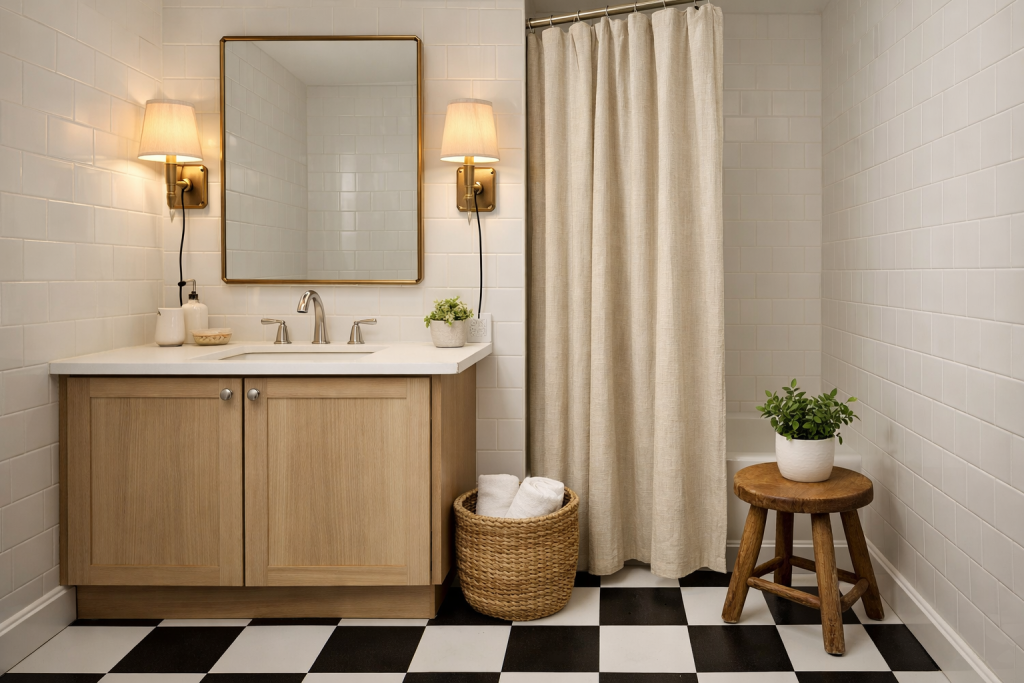
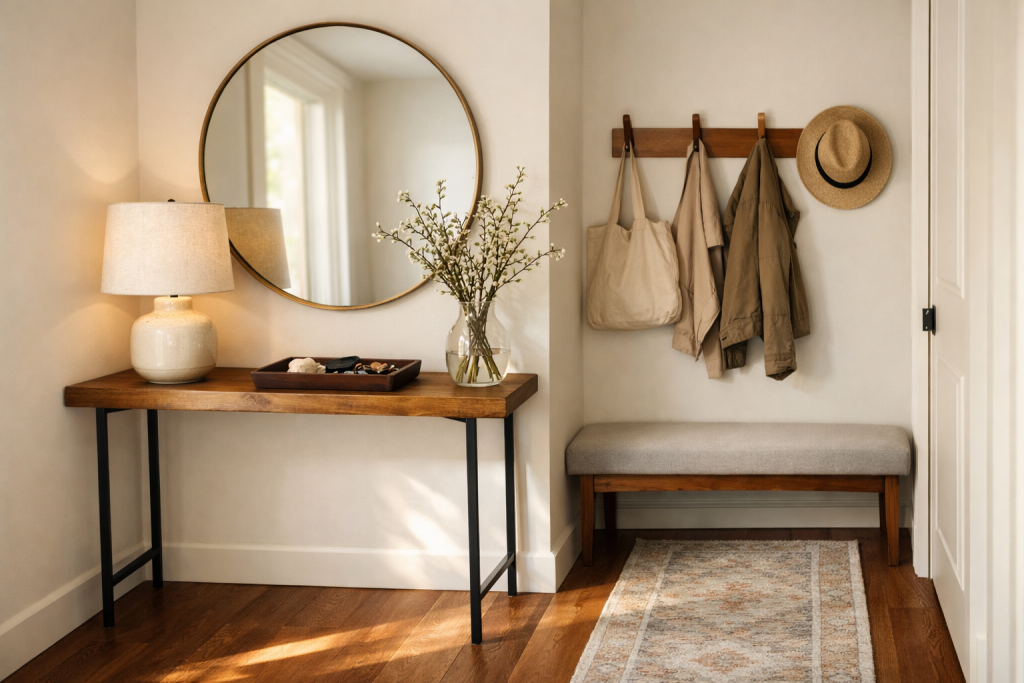
The room above is a good example because the color is bold, but the layout is simple. There is a compact sofa, a painted arch, open shelves, a graphic rug, a small table setup, plants, and a few playful pillows. Nothing is overly large, and nothing blocks the daylight. The color gives the room personality without stealing precious floor space.
The secret is choosing a contained color strategy. Instead of painting every wall or buying every accessory in a different shade, the room repeats a handful of colors: soft blue, coral, butter yellow, mint, cobalt, and warm natural wood. That repetition is why the room feels fun rather than chaotic.
The Room Decode
This room works because the biggest color move is on the wall and rug, not in bulky furniture. The sofa is colorful but calm, the arch creates a focal point, and the checkerboard rug ties the palette together. The result is rental-friendly, compact, and full of energy.
Use A Painted Shape Instead Of Painting The Whole Room
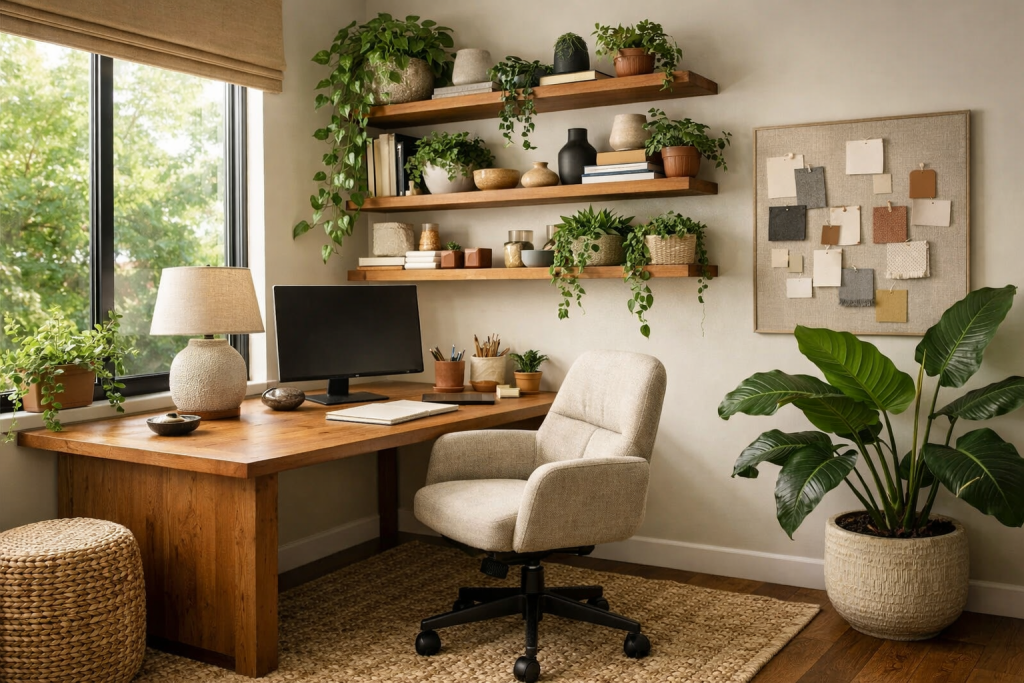
A painted arch is one of the best small-space tricks because it gives you the impact of color without overwhelming the room. It works especially well behind a sofa, bed, desk, or dining nook. The shape acts like a visual frame, which makes ordinary furniture feel more styled.
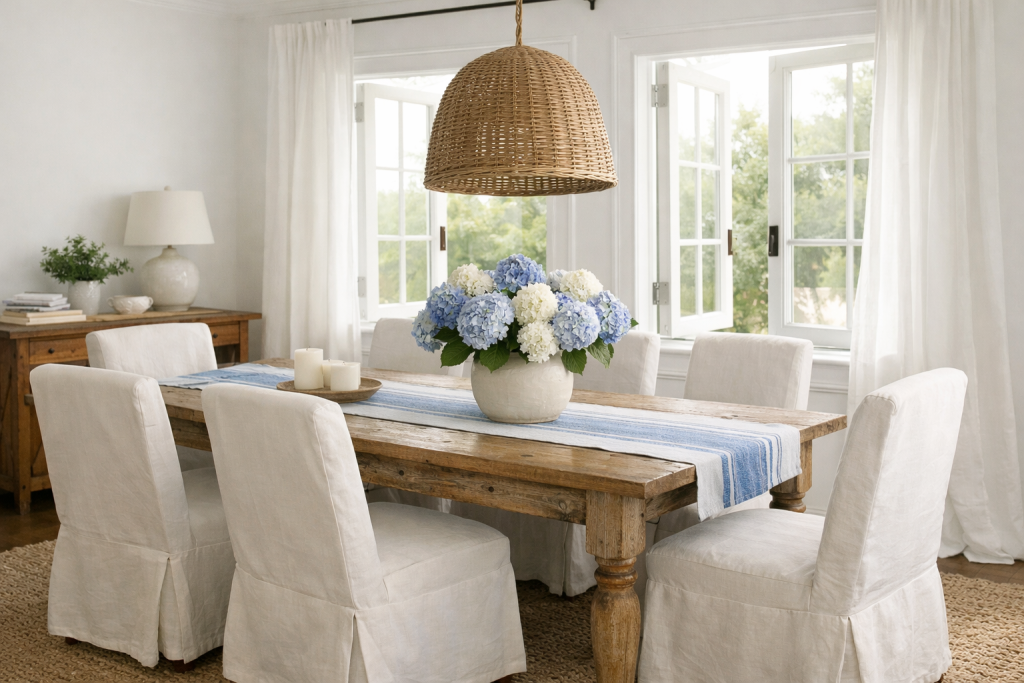
If you rent, you can get a similar effect with removable wallpaper, peel-and-stick decals, a fabric wall hanging, or a large piece of art. The point is to create one strong focal area. Small rooms often feel cluttered when every wall competes. A single color moment gives the eye somewhere to land.
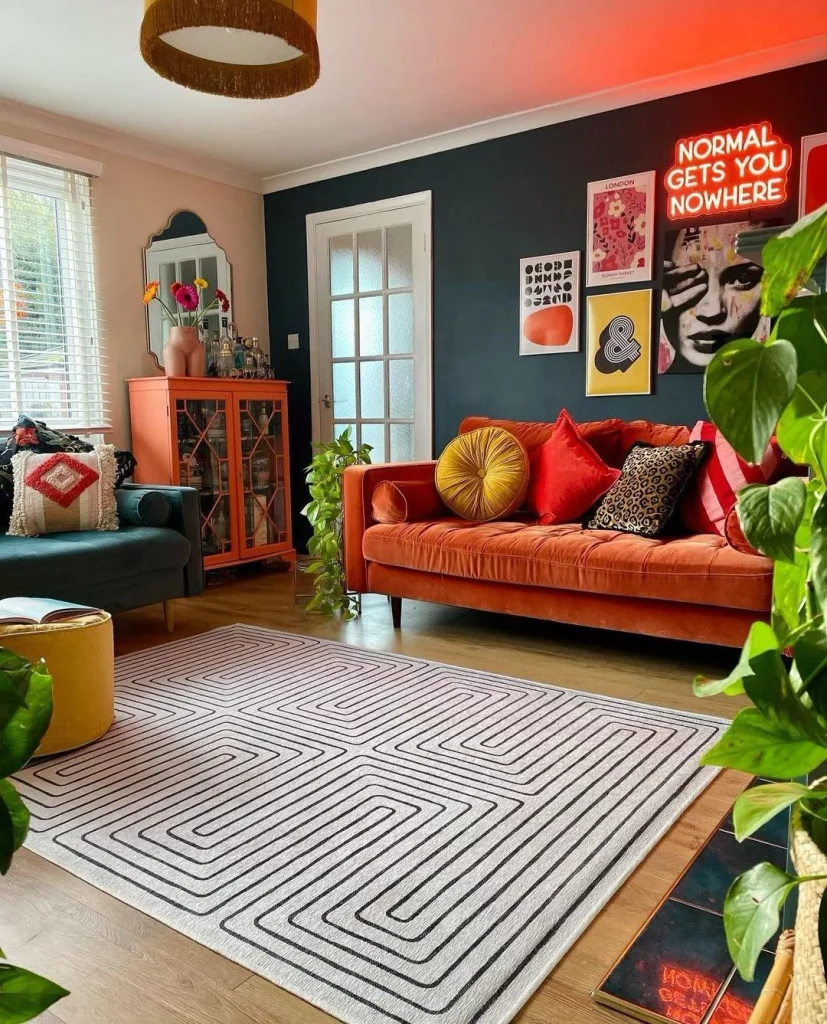
Coral is a smart choice here because it is warm and optimistic, but not as intense as red. It also pairs beautifully with blue, mint, cream, and yellow. If coral is not your thing, try dusty lavender, terracotta, butter yellow, sage, or powder blue.
Pick A Sofa Color That Still Acts Like A Neutral
A blue or green sofa can feel colorful without being difficult to decorate around. That is why soft blue works so well in this room. It is more interesting than gray, but it still behaves like a neutral foundation. You can add coral, yellow, cobalt, cream, or wood tones around it without the room feeling mismatched.
In a small apartment, the sofa should not be too deep or too heavy. Look for a compact profile, raised legs, and arms that are not overly bulky. Seeing a bit of floor under the sofa helps the room feel lighter.
If you already own a neutral sofa, you can still get this effect with pillows and throws. Use two or three colors from the rug or wall treatment, then repeat them in small doses.
Let The Rug Do The Organizing
A colorful rug can seem risky in a small room, but it often solves more problems than it creates. The rug defines the seating area, adds softness, and pulls the palette together. In this room, the checkerboard pattern repeats the colors from the wall, sofa, pillows, shelves, and accessories.
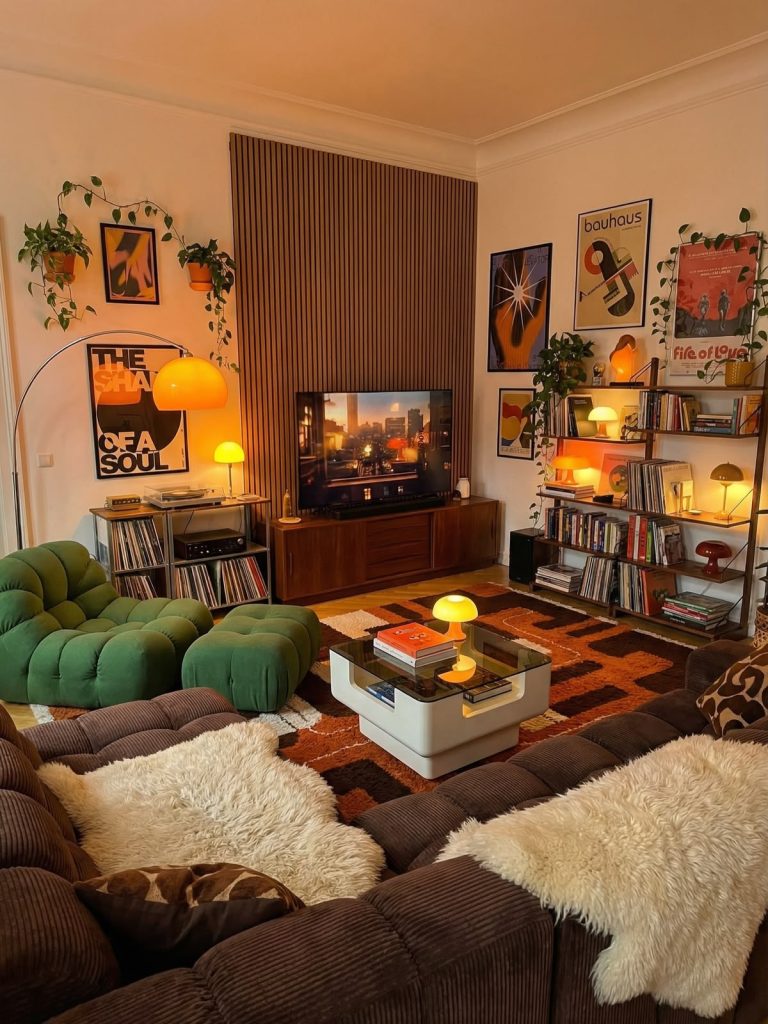
The key is scale. A tiny rug will make the room feel chopped up. Choose the largest rug that reasonably fits the seating area. Ideally, at least the front legs of the sofa should sit on it. A bigger rug makes a small room feel more deliberate.
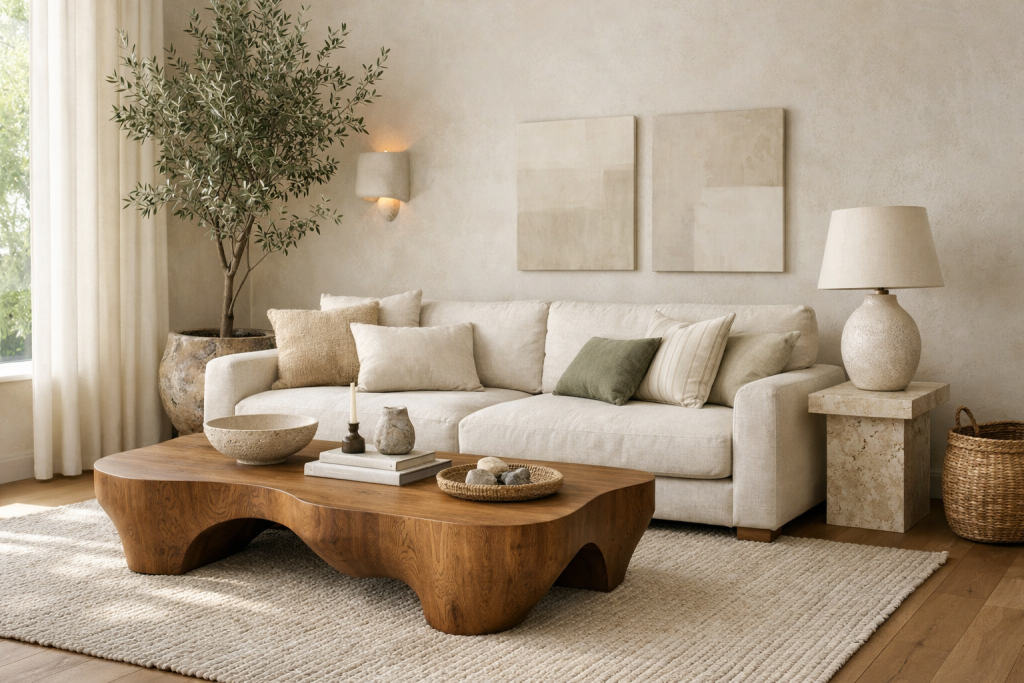
If your furniture is already colorful, choose a rug with fewer colors. If your furniture is neutral, the rug can be louder. You need one main pattern star, not five.
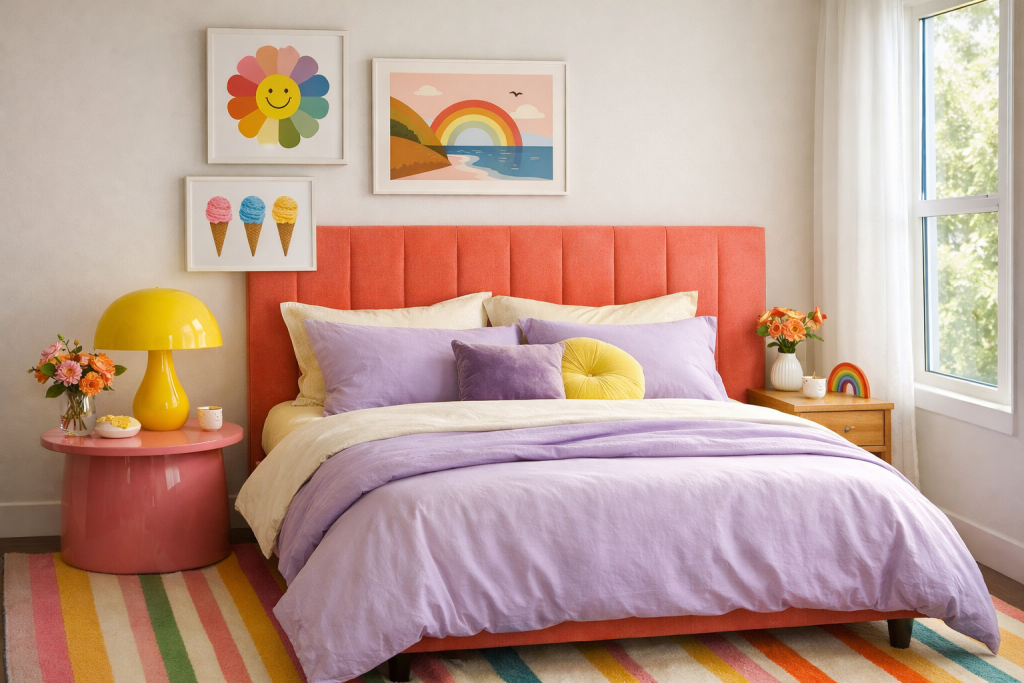
Use Open Shelving Carefully
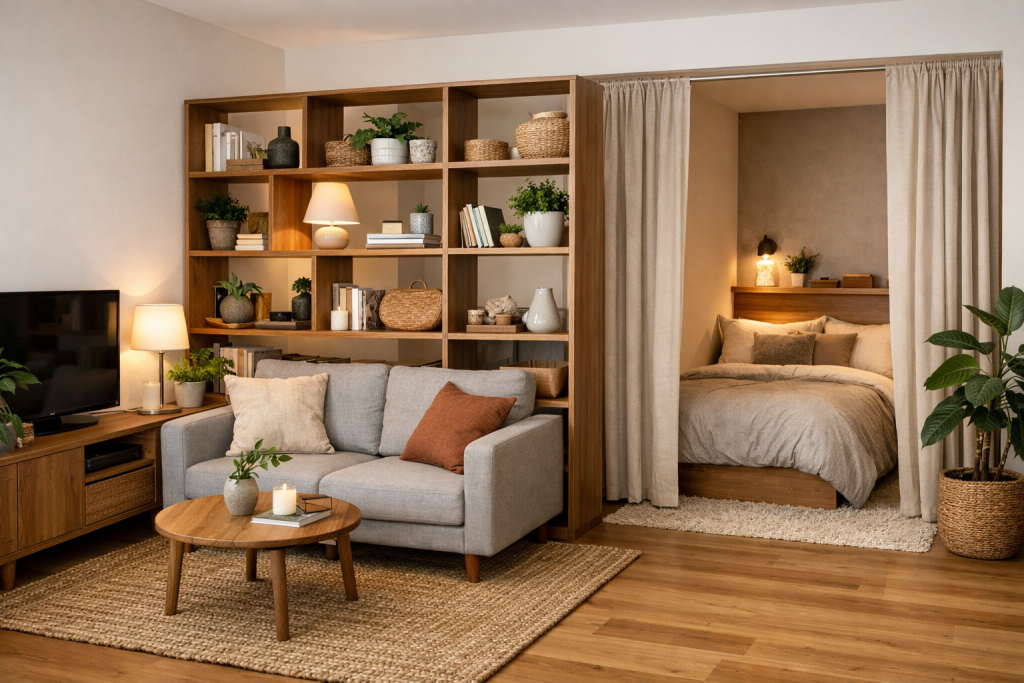
Open shelves are great in small apartments because they use vertical space and keep the floor open. But they can turn messy fast. The trick is treating shelves like a composition, not storage overflow.
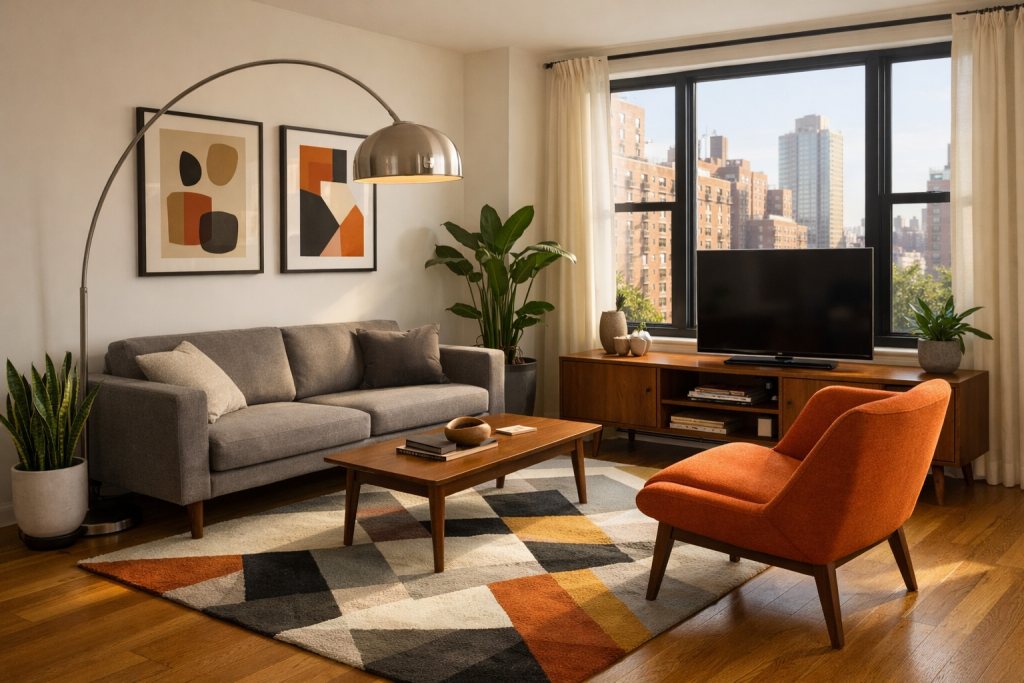
Mix books, ceramics, plants, and small framed art. Leave some empty space. Repeat colors from the room. Use baskets or boxes for less attractive items. The shelves should feel useful, but they should also reinforce the room’s palette.
A simple formula: books on one side, a plant on the other, one sculptural object in the middle, and a small piece of art leaning behind. Repeat that rhythm across shelves and the whole wall will feel designed.
Keep The Tables Small And Flexible
Small rooms benefit from furniture that can move. Nesting tables, a small round coffee table, a stool, or a cafe table can all be more useful than one heavy rectangular coffee table. Round shapes are especially helpful because they are easier to walk around.
In this room, the small tables add color and function without blocking movement. They can hold a drink, a book, a vase, or a laptop, but they do not dominate the floor plan.
Common Mistakes To Avoid
The first mistake is using too many unrelated colors. A colorful room still needs a palette. Pick four or five colors and repeat them. If a new item does not connect to the wall, rug, sofa, art, or pillows, it may not belong.
The second mistake is cluttering every surface. Color already adds visual energy, so surfaces need a little breathing room. Edit shelves and tabletops more than you think you need to.
The third mistake is buying oversized furniture. A colorful small room can feel amazing, but bulky furniture will make it feel cramped. Choose pieces with visible legs, lighter profiles, and flexible uses.